Yesterday, I left the state of Tennessee behind and entered Mississippi. I am now officially paddling through the Yazoo-Mississippi Delta, birthplace of the blues. Said to begin in the lobby of Memphis’ Peabody Hotel and end at Catfish Row in Vicksburg, the eye-shaped “Upper” Delta is the largest self-contained floodplain flatland along the entire Lower Mississippi River, 250 miles north to south, and 60 miles at its widest. It’s also the most famous floodplain, and the most feared. It’s the birthplace of the blues and of the share-cropping system. A thriving jungle wilderness through the Civil War, the Delta was considered a frontier into the early 1900s for its deep forests full of giant cypresses, oaks, sweetgums, and a fantastically active wildlife including cougars and black bear. Teddy Roosevelt hunted bear in the south Delta and declared he’d found the biggest trees in North America outside of the West Coast.
The Yazoo-Mississippi Delta is defined by the Yazoo and the Mississippi Rivers. The Yazoo “River of Death” is born of several Mississippi Hill Country rivers and streams, including the Coldwater, Yocona, Yalobusha and Tallahatchie Rivers, the same Tallahatchie that Bobby Gentry sang about concerning Choctaw Ridge, a Bridge, and Billy Joe McAllister.
Took my time breaking camp this morning and didn’t get onto the river until shortly after 10 AM. It was hot. But a occasional rinse with a cloth dipped into the cool river water from my seat in the canoe and a nice breeze made the heat bearable. And the best $50 investment of the entire trip so far – my Aussie wide-brim bush hat – kept the scorching sun at bay.
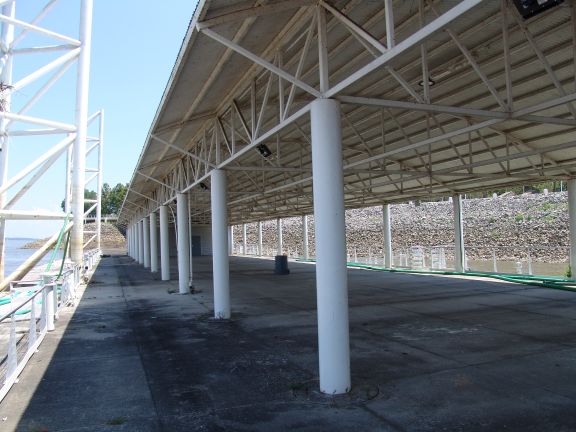
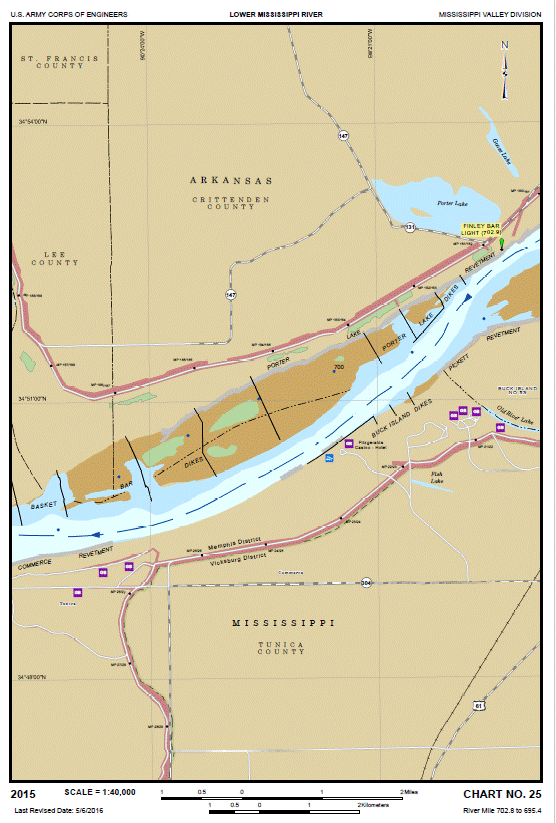
My paddle this morning took me pass a couple casinos and down to the Tunica Riverpark Museum (on the chart next to Fitzgerald’s Casino near Mile 699.5.) (http://www.tunicariverpark.com/home) While planning for this trip, I wrote in my notes that the Riverpark Museum was a must stop. Not only did it have a dock where I could tie up my canoe, but the museum offered air conditioning, a snack bar, water, and restrooms. In short, judging from it’s web site, it would be a chance to escape the heat of the day and enjoy an icy-cold drink.
So, I was more than a little disappointed to find the dock was long-deserted and in disrepair, and the museum closed due to air conditioning issues. No ice-cold drink, no air-conditioned respite, no snack bar. But it did have one thing. A nice shady cut grass lawn which I took advantage of for a very pleasant hour’s nap. So, the stop wasn’t completely for naught.
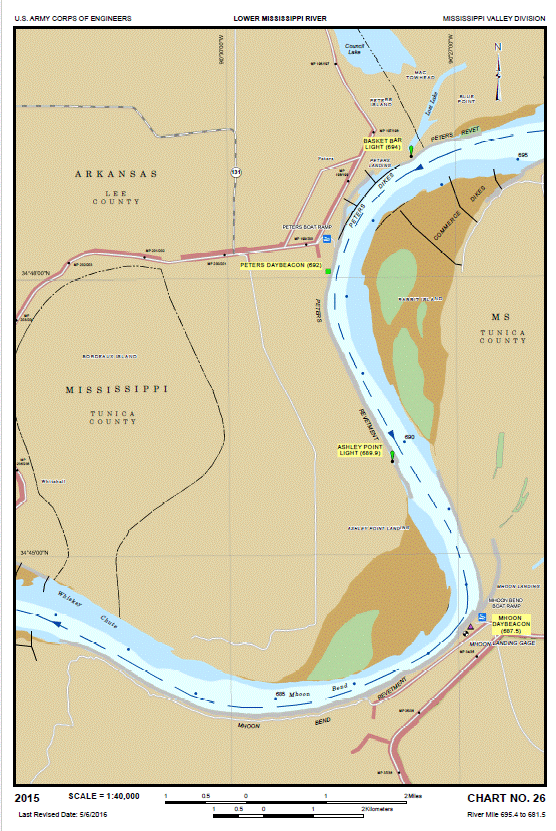
It was well past 1 PM when I finally shoved off from the Riverpark dock and continued on my journey. There was quite a bit of barge traffic on the river, and it took a while to get around Commerce Bend.
Commerce, Mississippi, had a hopeful beginning and was a thriving little river town in the 1830’s, but by 1841 it was engaged in a losing battle with the Lower Mississippi, and soon lost most of its waterfront buildings and houses. In 1874 the Mississippi jumped across a neck of land just below Commerce and cut about ten miles off its channel. Cut off from the river by the new channel, the town of Commerce was still hanging on in 1915, and still had a post office and steamboat landing, but the river had built up a big sandbar in front of it. As the steamboat trade on the river dwindled away, the riverfront community gradually disappeared.
But fortune has many twists and turns along its convoluted route. Today Commerce has been rejuvenated by a cluster of casinos just over the levee from the old town site. There is no present connection to the river save for a short revetment above Rabbit Island called Commerce Revetment.

It was late afternoon by the time I got through the bend and began my search for a place to spend the night. Spotted a little cove which looked promising so pulled in. The cove was situated just past a riverside house hidden back in among the trees, and when I paddled up, saw signs that the sandy little beach had been used by four-wheeler ATV’s recently. There were footprints in the sand, and what looked like a small crude ramp made of river flotsam and planks the ATV’ers had made. Upon stepping out of the canoe, I promptly sank up to mid-thigh in loose sand and mud, so the idea of unloading the canoe in that muck and pulling it completely ashore was unthinkable. I’d haves to leave it sitting in the shallow water parallel to the shoreline and just hope the wake from passing barges wouldn’t wash it too far up onto shore and make it difficult for me to move the mostly loaded canoe into deep enough water for me to paddle out tomorrow morning.

Anyway, not knowing if I was camping on private land and worried about wake waves from barges possibly capsizing my canoe, I was sure to have a bit of a restless sleep.


 River and Bayou
Leave a comment